

Jade Black
20 hours ago


Ink & Aether Studios
4 days ago


Ink & Aether Studios
6 days ago

The day after Valentine’s Day, my world cracked a little. I had to say goodbye to my dog, Mia — my shadow, my co-pilot, my emotional support goblin, my best friend of over ten years.
I can still see the moment our story began. I was working in my library system’s IT department back then, bouncing between branches teaching digital literacy classes. On that particular morning, the security guard waved me down. A cardboard box had been left out near the flagpole overnight.
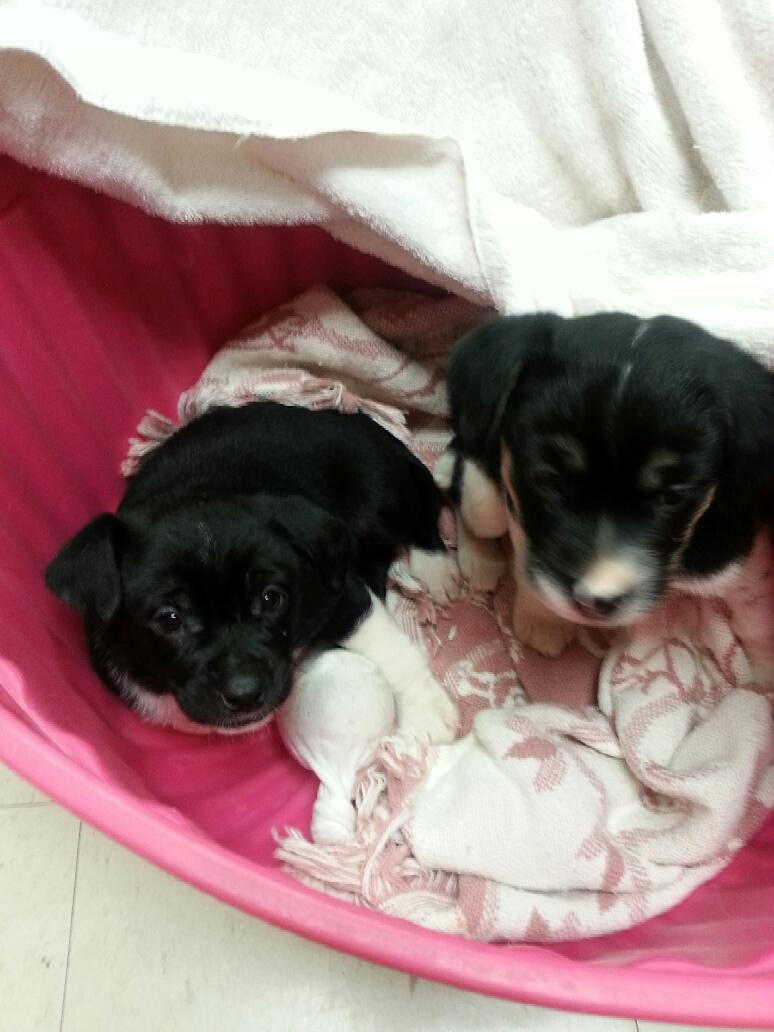
Inside were two tiny black-and-white puppies.
One greeted me like I was the long-lost love of its very short life — tail wagging, climbing over the edge of the box, ready to take on the world. And then there was the other one. Huddled in the corner. Trembling. Staring at me like she was trying to decide if I was safe.
That was Mia.
We made eye contact, and that was it. No dramatic orchestral score, no cosmic sign… just a tiny creature who looked at me like I might be her person. And she was right. I took her home that day.
(For the record, she conned me. That shy, quiet act lasted exactly two hours. Once she got comfortable, it was pure gremlin energy from dawn to dusk. She never stopped. Neither did the chaos. I adored her for it.)
Losing her gutted me.
I cried for days. I cried while brushing my teeth. I cried walking past the treat aisle at the grocery store. I cried every time I came home to a silence that felt wrong. Mia had been with me through every milestone and every unraveling — college, grad school, new jobs, burnt-out ones, heartbreaks, victories, days where I felt unstoppable, and days where I could barely get out of bed.

And I know grief. I lost my dad the week I started graduate school. I lost my grandmother — the woman who introduced me to Murder, She Wrote and therefore my entire personality — one month later. But losing Mia landed differently. Not bigger. Not smaller. Just… a different kind of ache. A deeper kind. The kind that rewires your daily rhythms.
My writing routine took a hit. My sketches slowed. My attention scattered like loose pages in a storm. But somewhere in that fog, writing became a tether — not something that healed me but something that kept me moving when everything else felt still.
Ironically, before she died, I’d started outlining a new story with a sidekick character inspired by her. At first, it felt lighthearted — a fun nod to my own chaos gremlin. But after Mia passed, that character stopped being a sidekick and started becoming a heartbeat.
The story shifted under my hands. It grew teeth. And tenderness. It started saying things I hadn’t found words for yet.
I’m a slow builder when it comes to stories. I outline obsessively, rearrange plot threads like a conspiracy theorist, and still leave enough room for the characters to hijack everything at 3 a.m. And in this particular story, grief walked in and took a seat. Not as a plot device — but as truth.
That Mia-inspired character became the emotional axis of the protagonist’s journey. Their bond carried echoes of mine with Mia: that quiet loyalty, that wordless understanding, that sense of being chosen and choosing back.
It made the whole story more human. More honest. More mine.

And the ripple didn’t stop there. When I returned to The Obsidian Throne: Edge of Darkness months later, I found myself writing one character’s grief with a clarity that hadn’t been available to me before. Not in a “pain makes art better” kind of way — I don’t believe grief exists to give writers material — but in the sense that I finally understood the texture of certain emotions. The weight of them. The silence after them.
Writing didn’t save me. But it gave me language. And direction. And a way to make meaning out of something that had none.
The apartment is quieter now. I still expect to hear the patter of paws or the jangle of her collar. I still look at her favorite spot on the couch and feel that familiar pinch in the chest. Some days it’s a whisper. Some days it’s a wave.
But grief — like stories — isn’t linear. It’s something you walk with. And writing has become the way I walk.
I don’t know if I’ll ever stop missing her. I don’t think I’m supposed to. But I do know this: Mia changed my life, and she changed my stories. And the act of putting words to that has given me a way forward.
Thank you for reading. If you’re grieving someone — human or otherwise — I see you. And I’m rooting for you.
Until next time,
Indigo Winter
Stories Across Realms


Comments